Growing Something: a Patio Garden Journal From Downtown RVA
By Will Melton · June 4, 2026 · 6 min read read
Category: Food & Drink
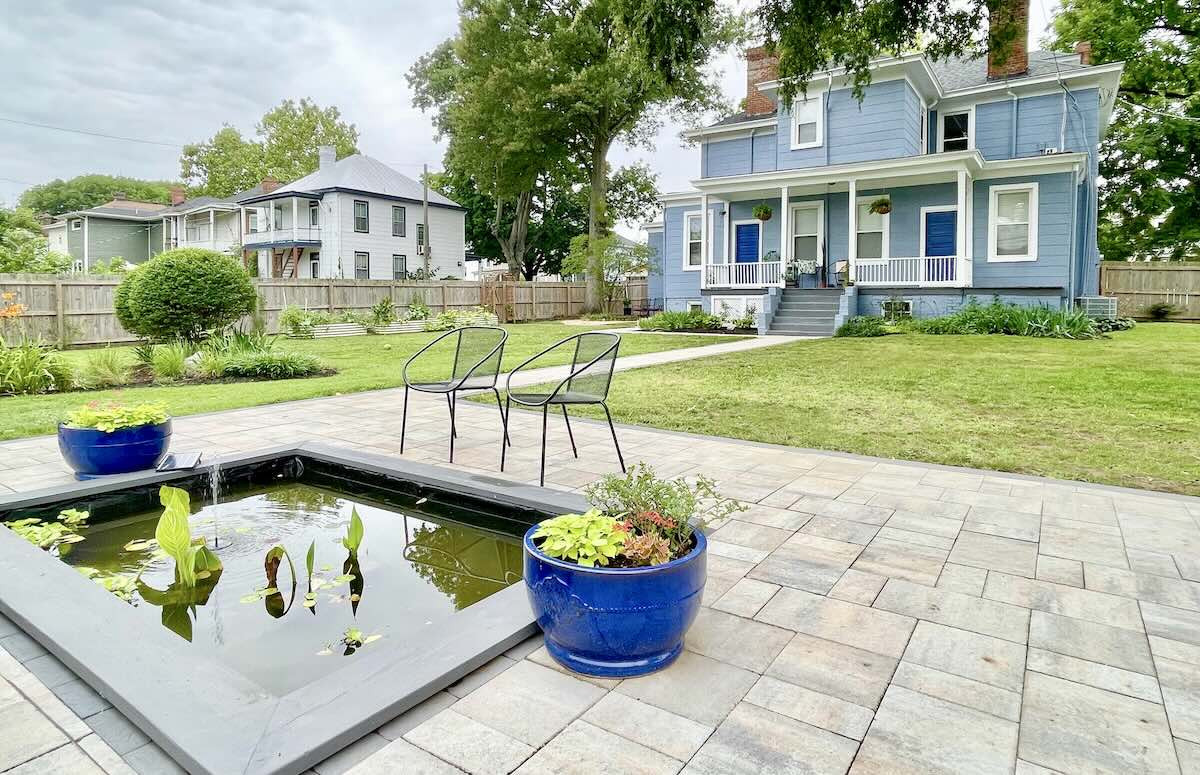
One tomato plant, a rooftop, and a case for putting food production back in your hands.
I made a quick run to the downtown Lowe's recently—it's close enough that I had no excuse not to—and came home with a tomato plant, basil, and rosemary. I was hoping to run into Francine, the beloved cat who calls the store home, but she wasn't working the floor that day.
This is the first year I've grown anything edible since moving from a double lot in North Highland Park, where I had three large raised beds going most summers—tomatoes, cucumbers, zucchini, squash, potatoes, carrots, beets, and a full spread of fresh herbs. That was a different chapter. Now I live in a condo with a small patio and a rooftop. This year I finally built the patio out the way I wanted: flowering plants, tall banana plants that I'd like to think take the edge off the highway noise, palm plants, a lounge area upstairs with an umbrella and a grill. It's been a process. Last year there were chairs and a table up there. This is the version I've been working toward.
This year, we're growing food again. One tomato plant on the roof, a basil, and a rosemary. The tomato came potted with a support trellis already in place—grab and go, no transplanting required. It's well along now, with starts on it. I'm already thinking about what to do with the harvest.
Why this year makes sense
Food and fuel prices haven't come down meaningfully, and a home garden is one of the more direct ways to offset both.
The weather also happens to be working in our favor this season. Forecasters have high confidence that El Niño conditions will develop this summer and strengthen into a strong—possibly super—El Niño phase. NBC4 chief meteorologist Doug Kammerer is forecasting a wet summer for the DMV, with between 36 and 46 days of 90-degree temperatures—above the regional average of 29 days—but without the prolonged heat waves or extreme highs that define the worst Richmond summers. Kammerer also expects the increased rainfall to begin addressing the significant drought deficit that has built up across Virginia over the past year.
Historical El Niño summers in Central Virginia offer some useful context. During the strong El Niño years of 1997 and 2015, Central Virginia saw fewer 90-degree days than the 29-day average—23 days in 1997 and just 16 in 2015. Neither year produced a prolonged heat wave. This summer's forecast trends hotter than those precedents, but the pattern of wetter conditions and fewer extreme events still holds.
If ocean temperatures reach their projected peak, this El Niño could rank among the strongest ever recorded. The current record belongs to 2015, with an Oceanic Niño Index of 2.8, followed by 1997 at 2.4. Super El Niño events have occurred only six times since 1950.
None of this is a guarantee. Seasonal forecasting carries real uncertainty. But wetter conditions and a higher floor of rain are genuinely good news for summer food crops.
Where to get started
If you didn't plant from seed in the spring, you're not out of options—you're just working with transplants. That's fine for most of what you'd want to grow right now.
Richmond sits in USDA Zone 7B, with a frost-free growing window that typically runs from mid-April through late October. Tomatoes, peppers, and eggplants can still be transplanted through late July. If you're buying transplants now, focus on cherry or smaller tomato varieties for faster yields. Bell, banana, or hot peppers can still thrive if planted in early to mid-June. Basil is a summer essential—pinch back the flowers for more leaf production. Oregano is drought-tolerant and excellent in containers. Thyme thrives in dry soil.
Seeds are the most economical way to grow, and you can get them from anywhere—online, at Lowe's, from a neighbor who saved some last fall. Starting from seed this late is tricky for warm-weather crops that need a long runway, but herbs and fast-growing vegetables are still worth trying.
For transplants and a proper local experience, two Richmond nurseries worth your time:
Strange's Florists, Greenhouses & Garden Centers (12111 W. Broad St., 804-360-2800) is one of Virginia's largest greenhouse growers and one of the largest retail garden centers in the country, with over 13 acres of trees, shrubs, annuals, and perennials.
Azalea Garden Center (1320 Westbrook Ct., Northside, 804-266-3119) has been family-owned and operating since 1994, specializing in flowers, mulch, soil, and hands-on expertise. Regulars consistently point to the quality of vegetable starts, compost, and fertilizer—and the customer service that comes with a place that's been in the neighborhood for decades.
A few things nobody tells you about raised beds
When I had the North Highland Park setup, I used corrugated metal raised beds—the kind that can be configured in different shapes to fit different spaces. They're available online and make it easy to build out a real growing operation quickly, even in a yard that wasn't designed around gardening.
The most common mistake for new gardeners: overplanting tomatoes and zucchini. Both produce abundantly. Plant too many and you'll be giving zucchini to neighbors who are already avoiding eye contact, and watching tomatoes split on the vine. Unless you're making sauce and freezing it—which I'd actually recommend—keep it to what you can realistically use and share.
For anyone working with a patio or balcony, container growing is more viable than most people expect. A single tomato in a good-sized pot with a support trellis is a low-lift setup that actually produces. Peppers, green beans, and herbs are all well suited to patio conditions.
What's next on the patio—and a note on plastic
As the season continues, I'm thinking about adding a couple of peppers and rounding out the herb situation with sage and parsley—working toward a proper Italian blend. I eat a good amount of green beans, so that's also on the list.
Part of what's driving my thinking this year goes beyond gardening. I've been working to remove plastic from my environment for a while now, which is harder than it sounds when you rely on meal kit delivery services for most of your nightly cooking. The Plastic Detox, now streaming on Netflix, follows six couples as they work to lower their daily plastic exposure—and it pushed me to get more serious about it. Highly recommend. Worth your two hours.
That documentary is part of what motivated Simmer Circle, a project I've been quietly building. The idea: friends and family make large-batch sauces together and share them in plastic-free containers, speeding up weeknight cooking while cutting down on plastic exposure. I already have the containers. What I can't do is make five sauces a week by myself. If you want to join the circle, drop a comment below—if there's enough interest, we'll make it happen.
As food prices stay elevated, putting more production in your own hands—even just a pot or two on a rooftop—keeps making more sense. More updates as the tomatoes come in.
Growing something this year? Want in on Simmer Circle? Tell us in the comments.