The Great AI Migration: Why Thousands Are Leaving ChatGPT for Claude — Today
By Will Melton · March 2, 2026 · 9 min read read
Category: Technology
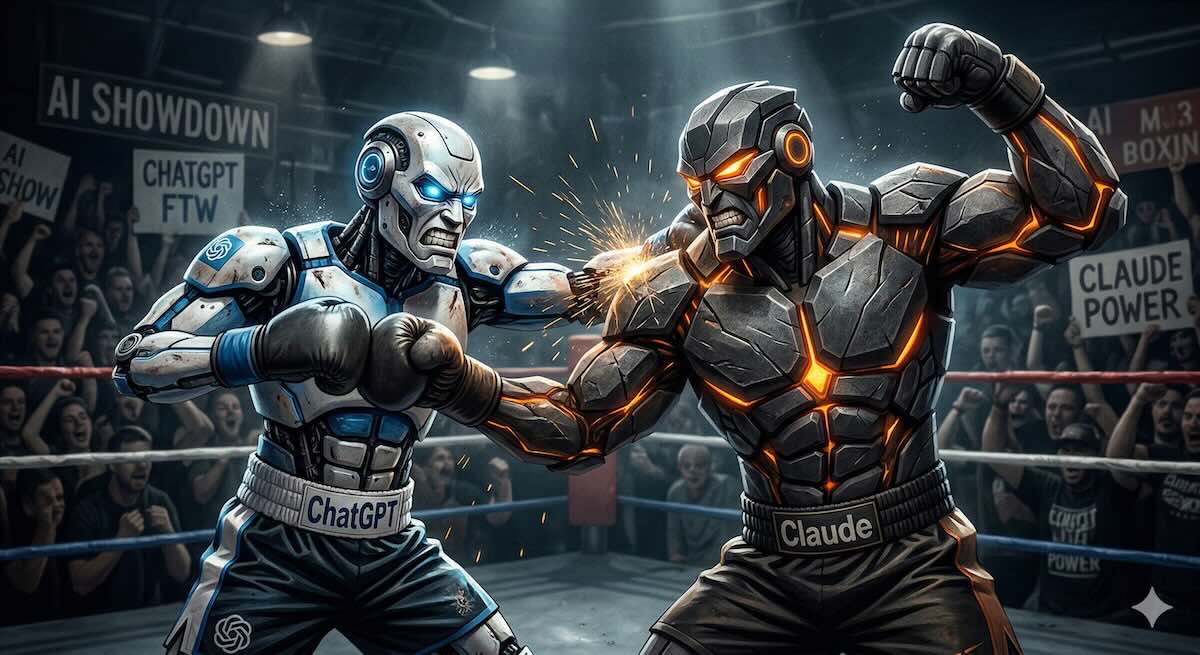
Something unusual happened this week in the American workplace — and it happened fast. Employees across companies and industries, without coordination or instruction, started switching their personal AI tools. By Monday morning, Anthropic's Claude had climbed to No. 1 on Apple's U.S. App Store.
Something unusual happened this week in the American workplace — and it happened fast. Employees across companies and industries, without coordination or instruction, started switching their personal AI tools. Not away from something failing, exactly. Away from something that no longer felt right. By this Monday morning, the signal was unmistakable: Anthropic's Claude had climbed to the No. 1 spot on Apple's U.S. App Store, displacing OpenAI's ChatGPT — a position ChatGPT had held with almost uninterrupted authority since its launch. And then, as if to underscore the moment's intensity, Claude crashed under the weight of unprecedented demand.
"The issues we are seeing are related to Claude.ai and with the login/logout paths."
Anthropic Status Page, March 2, 2026
This is the story of what happened, why it matters, and what the data actually shows about a shift that may be rewriting the enterprise AI landscape.
How Claude Got to No. 1
The immediate trigger was a high-stakes standoff between Anthropic and the U.S. Department of Defense. As reported by CNBC, Anthropic had been negotiating terms for its existing classified military contract, insisting on explicit prohibitions against two uses: mass domestic surveillance of American citizens, and fully autonomous lethal weapons systems that can strike targets without human oversight.
The Pentagon pushed back, demanding the right to deploy Claude for "all lawful purposes." After delivering what it called a final offer on a Wednesday night deadline, the standoff collapsed on Friday, February 28. According to Fortune, President Trump ordered all federal agencies to cease using Anthropic's products.
Within six months. Defense Secretary Pete Hegseth went further, declaring Anthropic a "supply chain risk" — a designation, as Anthropic noted, that had never before been publicly applied to an American company.
Anthropic CEO Dario Amodei stated the company would challenge the designation in court. "Threats do not change our position: We cannot in good conscience accede to their request," he wrote.
Hours later, OpenAI announced its own agreement with the Pentagon for classified AI deployment. CEO Sam Altman said the deal included his company's same two safety red lines — no mass surveillance, no autonomous weapons — but his own admission that the deal was "definitely rushed" and that "the optics don't look good" did little to quiet the backlash. MIT Technology Review analyzed whether OpenAI's protections were as strong as Anthropic had demanded, concluding the agreement ultimately relied on the assumption that the government would not break the law — precisely the assurance Anthropic had found insufficient.
The public reacted immediately. Reddit forums filled with posts from users canceling ChatGPT subscriptions. A "Cancel ChatGPT" movement spread across social platforms. More than 700 employees across major AI companies signed an open letter calling for restraint in government AI deployments involving surveillance or autonomous weapons, according to Ghacks.
The result, reported by TechCrunch: Claude climbed from outside the top 100 free apps on the App Store at the end of January to No. 1 by Saturday evening, March 1 — passing No. 6 on Wednesday, No. 4 on Thursday, and seizing the top spot by Saturday. An Anthropic spokesperson confirmed daily sign-ups have broken all-time records every day this week, free users have grown more than 60% since January, and paid subscribers have more than doubled this year.
The Outage: What Crashing Actually Means
By Monday morning, March 2, Claude's infrastructure buckled. Bloomberg reported that consumer-facing services including claude.ai, Claude Code, and the mobile apps went offline, with Anthropic citing "unprecedented demand" over the past week as the underlying cause. Nearly 2,000 users flagged disruptions at the peak, according to Downdetector, though Proactive's reporting noted that total report counts reached approximately 10,000, suggesting the outage unfolded in waves.
Anthropic's status page confirmed the Claude API — used by businesses and developers who have integrated Claude into their own systems — remained functional throughout. Only consumer-facing surfaces were affected. By late afternoon Eastern, the company said the issue was resolved.
An AI tool crashing under user demand is a different kind of problem than an AI tool failing to deliver. It is, in a peculiar way, a sign of success.
The outage is worth noting in context: it is not a sign of technical inferiority. It is evidence that user growth overwhelmed infrastructure designed for a previous scale. And when that infrastructure is rebuilt for the new load, the underlying demand that caused the crash will still be there.
What the Data Shows About the Broader Shift
The Pentagon episode accelerated something that was already underway. The numbers tell a story of structural change, not just a week's news cycle. Market share is moving. According to AI Business Weekly, ChatGPT's generative AI market share dropped from approximately 86.7% in January 2025 to around 64.5% by early 2026, as Google Gemini, Perplexity, and Claude all gained ground. Claude's enterprise AI assistant market share, according to SQ Magazine, grew from 18% to 29% in a single year — a 61% year-over-year increase.
Enterprise penetration is accelerating. An analysis of 76,000 companies by researcher Bloomberry found that nearly half of Claude's enterprise customers also maintain a ChatGPT contract, while only 6.5% of ChatGPT customers have added Claude. The interpretation: Claude attracts technically sophisticated organizations with complex requirements who see multi-vendor AI as strategic. Companies that choose ChatGPT tend to stick with it exclusively — 91% use it alone — while Claude often gets added to fill gaps ChatGPT leaves.
Fortune 100 penetration is high. Incremys reported that 70% of Fortune 100 companies use Claude, with 46% of claude.ai usage being work-related and 74% of enterprise API usage classified as business use.
Developer adoption is surging. UncoverAlpha's analysis found Anthropic reached 300,000+ business customers by August 2025, up from fewer than 1,000 two years prior. Claude Code — its AI-powered coding tool — has seen daily installs climb from 17.7 million to 29 million in the early months of 2026, rivaling the adoption curve ChatGPT itself saw at its breakthrough moment.
User satisfaction is high. Claude carries a 92% user satisfaction rate with a 4.6/5 rating across over 152,000 mobile app reviews, per Incremys. On G2, users rate Claude higher than ChatGPT specifically on creative writing and coding, while ChatGPT holds an edge on research depth and ease of use.
Why People Are Actually Switching — Beyond the Headlines
The Pentagon controversy may have opened a door, but the people walking through it cite a range of reasons. A meaningful portion are responding to Anthropic's principled stance on autonomous weapons and surveillance. Some are driven by long-standing privacy concerns about how AI tools handle user data. And some are simply tired of feeling let down by a tool they've been paying for.
The performance case is real and documented. A 2026 benchmark cited by LogicWeb found Claude Opus 4.5 scored 80.9% accuracy on SWE-bench Verified — a complex coding benchmark — compared to GPT-5.2's approximately 70%. In essay-writing benchmarks, Claude's long-form coherence scored 85% on structure versus ChatGPT's 78%. Developers on Reddit and X describe Claude as the "developer's pick" for sustained, complex work, while preferring ChatGPT for speed and multimodal tasks like image generation, where Claude does not yet compete.
The enterprise adoption data from Bloomberry reveals a dynamic that may matter most for the long term: organizations adding Claude after using ChatGPT aren't doing it for the news cycle. They're doing it because ChatGPT isn't handling specific, high-complexity workloads — long-context document analysis, sustained multi-hour autonomous tasks, formal reasoning in regulated industries. Those are precisely the workloads that define how enterprise AI actually generates value.
"Claude Code is having its own ChatGPT moment."
UncoverAlpha, January 2026
ChatGPT isn't disappearing. It still processes over 2.5 billion prompts daily, per AI Business Weekly, and commands 800 million weekly active users globally. The competition remains asymmetric by scale. But scale is not the same as trajectory — and the trajectory data increasingly points in one direction.
What This Looks Like From Richmond
The macro shift is visible at the local level. The pattern is the same across teams, companies, and conversations here in Richmond as it is nationwide: individuals independently discovering Claude, sharing the experience with colleagues, and watching the adoption spread sideways through organizations without any top-down directive.
I've seen it in my own company this week. People were using their personal Claude accounts — not company-issued ones, on their own dime — because the tool was delivering results their previous subscriptions weren't. They weren't waiting for a mandate. They were solving problems.
This is how enterprise AI actually spreads. Not through procurement teams and IT mandates, but through one person saying "try this" and the result speaking for itself. The 2026 data suggests that moment is happening for Claude broadly, simultaneously, and faster than most industry observers expected.
For Richmond professionals navigating this shift, the question isn't just which tool wins. It's whether our workforce is positioned to use these tools effectively — and to keep pace as the landscape continues to change beneath us.
That's precisely the work AI Ready RVA exists to do. The nonprofit — Virginia's leading community AI organization — is a hub where Richmond professionals can build AI literacy, connect with peers and opportunities, and stay current as the field evolves. Whether you're just beginning to understand how AI fits into your work or you're already integrating it into daily operations, AI Ready RVA offers cohort programs, events, and a professional network built specifically around this moment.
The organization's next major event, The Power of Possibility: AI Ready RVA Conference & Expo, takes place April 1, 2026, at the Dewey Gottwald Center at the Science Museum of Virginia — a gathering of Richmond's business, tech, education, and policy communities around the practical future of AI in our region.
Whether the broader momentum holds beyond this week depends on whether Anthropic can scale its infrastructure, sustain model improvements, and keep the trust that brought users here. The outage today is a reminder that rapid growth creates its own pressures.
But on the first Monday of March 2026, the migration appears real — and the data is catching up to what people have been seeing in their text threads, Slack messages, and live meetings. Richmond is part of that story. The only question is whether we're building the capacity to lead it.
Reporting draws on data and coverage from TechCrunch, Fortune, CNBC, Bloomberg, MIT Technology Review, Sensor Tower, Bloomberry, Incremys, AI Business Weekly, SQ Magazine, and UncoverAlpha.