Delta Says it Doesn't Use Surveillance Pricing. Here's What it Looks Like From Seat 14F.
By Will Melton · September 25, 2026 · 11 min read read
Category: News & Politics
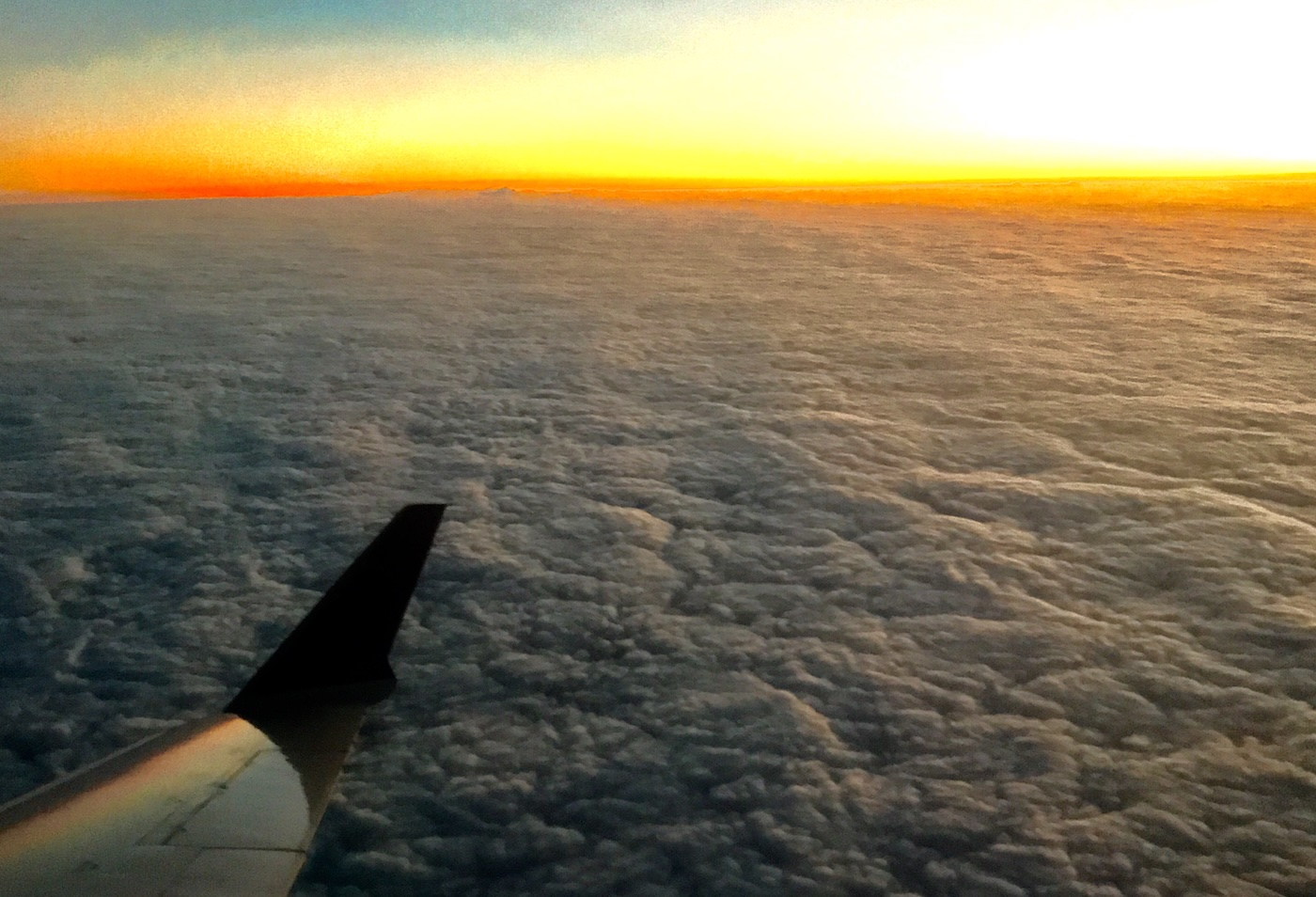
A traveler's attempt to upgrade a flight for his wife revealed a significant price discrepancy, raising questions about Delta's dynamic pricing.
I was trying to surprise my wife with a First Class upgrade.
It was Saturday night, August 1, and Courtney was flying home the next day, Nashville to Atlanta to Richmond, every leg booked in Delta Comfort. I was checking her in on the Fly Delta app, the way I've checked us both in likely a hundred times, when it offered me an upgrade to First Class on the Nashville–Atlanta leg for $103 or 9,500 SkyMiles. A short hop, a good price, and she'd get to experience First Class for the first time. I hit the button.
The wheel spun and it kept spinning. Then the app gave up and dumped me back where I'd started, with no confirmation and no error, so I went back in and tried again.
Seconds later, the same upgrade on the same flight was $206, or 19,500 miles.
I'd show the receipts, but I didn't take a screen shot. Why would I feel the need to take a screenshot of a price from a company I trust? I've been a Silver Medallion member for years. I carry the card. I had no idea I needed to protect myself from the checkout screen.
Prices Change All the Time
I opened Delta's text support that night and explained what happened to an agent named Cristal, who told me upgrade offers can change at any time and asked for my city pair and dates. I gave them. The chat went quiet, then reset itself. A bot picked up, asked me to choose a language, then asked me to rephrase my question "in a short and simple sentence." By then I only had one sentence left in me: I already told you, reread the last messages. When the bot finally routed me to a human, that line was the entire record it passed along under "Reason for Chat."
The next agent, Noor, asked for my city pair and dates again. Then she checked and told me it would cost 33,500 SkyMiles to upgrade Atlanta to Richmond in Delta First. I had never mentioned Richmond. I told her I was asking about Nashville to Atlanta, and that I'd been offered 9,500 miles. She apologized for the confusion, confirmed the Nashville–Atlanta upgrade was now 19,500 miles, said those were the current prices as of now, and asked if I'd like to proceed.
I said no. I said you can't offer me one price and then, seconds later, a price twice as much. The reply came back in two messages: prices are dynamic and can change frequently, and this was a system-generated price over which they had no control, with no way to revert to the old one.
That was the end of the first night.
Two Letters to Congress
I'd never heard of Delta's surveillance pricing story until last night, when it came across my feed on Instagram. I looked it up and found out the story had actually broken over a year earlier, in the summer of 2025, and that Delta had just published a second letter to Congress about it days before. Reading that letter is what turned my own upgrade from an annoyance into this article.
The first letter to Congress went out July 31, 2025, to Senators Ruben Gallego, Richard Blumenthal, and Mark Warner of Virginia. The second went out September 9, 2026, to Rep. Frank Pallone, who had written to eight airlines in August as part of a House Energy and Commerce inquiry into surveillance pricing, the practice of using a customer's personal data to decide what price that customer sees. Both letters are signed by Delta President Peter Carter, and both are posted on Delta's news site under the word "misinformation."
The core sentence is identical across fourteen months: no fare product Delta has used, is testing, or plans to use "targets customers with individualized prices based on personal data." The 2026 letter goes further. It says Delta is "deeply concerned" that this narrative could damage consumer sentiment and trust. It says Delta does not provide its AI pricing tool with personal information about customers, and that the fares it files don't take any customer's personal data into account. The 2025 version makes a point of noting that customers don't have to sign in to shop, and can compare prices without giving Delta any personal information at all.
I read those sentences twice, as someone who just watched a price double at checkout.
Every one of them is about fares. Filed fares, fare products, the prices published to the industry clearinghouse several times a day. Not a single sentence in either letter says a word about the upgrade offer that appears after you've booked, after you've signed in, at the moment the app knows your name, your status, your card, your itinerary, and the fact that you're checking in a passenger who isn't you. You can shop for a fare anonymously. You cannot check in anonymously.
The letter also says the pricing tool never receives personal information about customers. I have no way to know if that's true in my case. What I know is that I tapped an offer, the purchase failed, and the retry cost me twice as much — and Delta's own agents couldn't tell me why. Maybe my own demand signal moved the price without a shred of personal data involved. Maybe something else did. The letter is written precisely enough to be true either way, and that's the problem: when a company can't or won't explain a price change to the customer it happened to, the customer is left to wonder, and wondering is exactly what breaks trust with a flyer who's been loyal for years.
What Delta Told Investors
The other half of the record was written for a different audience.
At Delta's November 2024 Investor Day, then-President Glen Hauenstein described the goal of the new pricing system as having a price available on that plane, at that time, for "you the individual." He called it a super analyst working around the clock, and a full re-engineering of how Delta prices. By the July 2025 earnings call, the system, built by an Israeli company called Fetcherr, was setting about 3% of Delta's domestic fares, with a target of 20% by the end of the year, and Hauenstein told analysts he liked what he saw. Gary Leff, who has covered airline loyalty for two decades at View from the Wing, has documented that Fetcherr's own marketing described understanding each customer as an individual and moving from segments of thousands to "segments of one" before that language was taken down.
So there are two Deltas on the record. One tells Congress it has never priced anyone as an individual and is hurt by the suggestion. The other told Wall Street that pricing you as an individual is the destination. Both can be true if the second one just hasn't arrived yet. I flew through the space between them.
The Next Day
Courtney's flight out of Nashville was delayed. When she boarded, she was in the main cabin. Her Comfort seat, 14F, the one I paid for, was gone.
I went back to the same text thread and asked why a passenger who paid for Comfort had been moved to coach. The bot couldn't parse it, asked me to rephrase, offered the same menu, then suggested Delta Concierge for faster help and asked me to log in. I logged in. It thanked me by name for my loyalty as a Silver Medallion member and offered the menu again.
I voice-texted: I wanna speak to an agent.
Shaine picked up. She thanked me for my status, said she understood why I was upset, and explained that seat assignments can shift for aircraft changes, operational requirements, or schedule adjustments — but she didn't want to speculate about my case specifically. She'd need to review the reservation. I asked to send an in-flight accommodation, but that was not possible.
I told her that if Delta expected my loyalty, there should at least be a way to flag a problem in the moment — because I was flagging it right now, in Delta's own app. She offered to document my concerns on the reservation instead, so there'd be a record I'd contacted them while it was happening. I accepted. She confirmed she'd noted the seat change, the upgrade experience, and the service concerns. I said thank you. She asked if there was anything else.
The next message closed the conversation "due to the lack of response."
Then the survey. Was my concern resolved by the representative, yes or no?
No.
And before it asked anything further: This survey has expired, and no further action is needed. No confirmation that the survey was submitted; just an error.
Two AIs
I advise companies on customer experience and how to deploy AI inside it. Sales is customer service. The offer, the checkout, the confirmation, the seat you sit in, the person you reach when it goes wrong, all of it is one relationship to the customer, however many departments it crosses on the inside. Delta's own letter makes that case. It says the company's AI strategy is meant to enhance, not exploit, the customer experience, and it lists reservations specialists using AI tools to resolve problems faster and more consistently. It names Delta Concierge.
Here is how the two halves of that strategy performed on a Silver Medallion member across two days.
The AI that sets prices worked flawlessly. It moved a First Class seat from $103 to $206 inside one failed transaction, and when I asked about it, three separate humans told me the number came from the system and the system was not something anyone could touch.
The AI that serves customers could not understand a sentence about its own product. It asked me to simplify. It summarized my complaint as my own demand to reread the previous messages. It quoted me the wrong route. It sold me a Concierge upgrade while I was trying to report a downgrade. It closed the chat after I said thank you, and it expired the survey after I said no.
Delta wrote to Congress that it is worried about consumer trust. No one there seems to have noticed that its own systems are the ones breaking it.
Who's watching
If you're wondering who regulates any of this, the short answer is almost no one.
The Federal Trade Commission put out a proposed enforcement policy on personalized pricing in August, warning companies that varying prices based on personal data without disclosure may violate federal law. Airlines are carved out of the FTC's authority by statute. New Jersey and New York have passed laws on surveillance pricing this year; Leff points out that the Airline Deregulation Act blocks states from regulating airline prices, so those laws stop at the jet bridge. That leaves the Department of Transportation, which looked at personalized airline offers in 2014 and declined to call them unlawful. Pallone, as ranking member rather than chairman, can ask airlines questions but can't compel answers. Delta's answer was to call the question misinformation.
Warner co-signed the 2025 letter. He got the same answer Pallone did this month. If a sitting senator's letter doesn't move Delta, a customer's doesn't either.
Seat 14F
I can't prove Delta used anything about me to double that upgrade. The likely and boring explanation is that my failed purchase locked up the cheapest First Class seat and the retry pulled the next price tier. That may be what happened. But Delta couldn't tell me that either. Its agents called the price system-generated and said no one could explain it further. Its bots couldn't parse a straight sentence, quoted the wrong route, and closed the case anyway.
A company that has told investors it intends to price each of us individually, and told Congress it would never, built a system that can change a price on a loyal customer in the time it takes a spinner to fail, and then built a second system that can't explain the first one.
Courtney landed in Richmond after midnight. She had a window seat in the back. The offer Delta dangled in front of me had a serious unintended consequence for this customer.
Will Melton is the founder and CEO of Xponent21, a Richmond-based AI visibility and digital marketing agency, and a customer experience strategist who advises companies on deploying AI in sales, service, and operations. He is the co-founder of AI Ready RVA and teaches at the University of Richmond. He has been a Delta Silver Medallion member for years.