Five Men Are Deciding Your Future. Here's Your Ballot.
By Courtney Turrin · July 7, 2026 · 11 min read read
Category: For Curious People
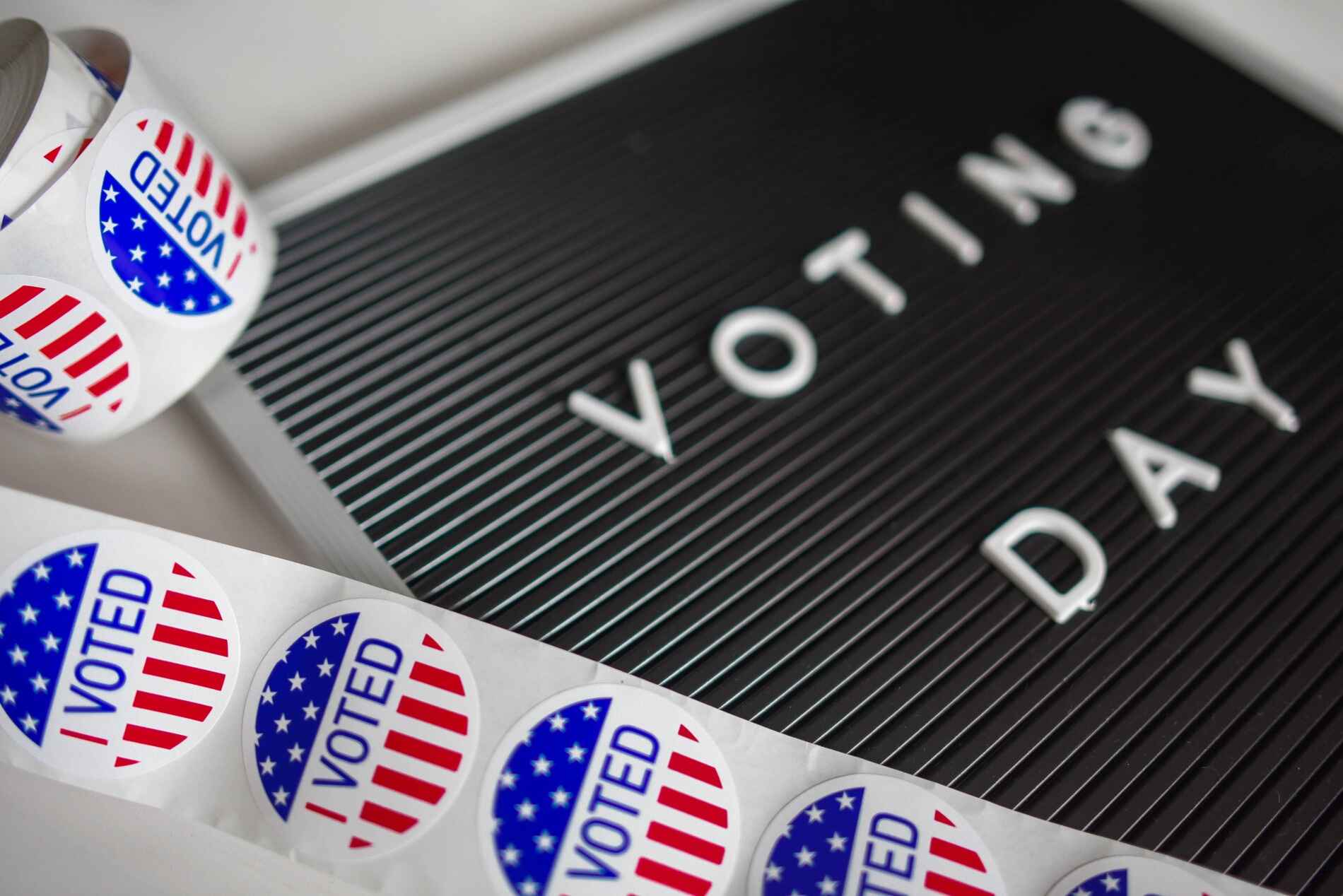
There's an election happening right now that nobody told you about, and you're already a voter in it.
This past April, Virginia held a special election over how to redraw its own congressional maps. Campaigns poured more than $90 million into convincing you which way to vote, the most expensive ballot fight in state history. You did the homework. You showed up. The redistricting measure passed. A few weeks later, the Virginia Supreme Court struck it down anyway. That's the kind of thing that gets on a ballot: months of argument, tens of millions in ads, an actual campaign fighting for your actual vote, and it can still evaporate after the fact.
Meanwhile, a handful of men who answer to boards, to shareholders, and occasionally to a Senate subcommittee, but never to us, have spent years deciding what your kid's homework assistants will sound like and what comes up when you research your own health symptoms at 2 a.m. None of that was ever on a ballot. It was never going to be. And it goes further than that. They're not just deciding what your job looks like next year. Several of them are already writing the essays about what happens after your job doesn't exist at all, and what you're supposed to do with your time and your sense of purpose once it's gone. They have a word for that future. They call it abundance.
So here's a ballot for a race nobody told you was happening: five candidates, zero polling places, and opposition research pulled straight from each candidate's own campaign staff, meaning the AI system built by their own company. Some of them turned in real dirt on their boss. A couple couldn't resist softening the landing for the guy who signs their paycheck. Either way, we're voting. Ballots below.
Sam Altman
OpenAI · ChatGPT
Running for: Secretary of What You're Allowed to Know
The stump story: Altman likes to place the origin of OpenAI somewhere warm and human, a small group asking how to build the most consequential technology in history for everyone's benefit. He told a Senate committee it started with people gathering "around a kitchen table." Good story. Also the founding myth of a company that now needs hundreds of billions of dollars to survive.
Platform vs. record: the platform is safety, broad benefit, humanity first. The record is a capped-profit restructuring, a valuation race, and a product that went from research demo to essential utility in about eighteen months. He'll tell you both things are true at once. Maybe they are.
How he calls the big ones: make the expensive bet, defend it in public for years afterward. The capped-profit pivot in 2019. Shipping increasingly capable systems to the public while personally lobbying Congress to regulate exactly that kind of system.
Opposition research, courtesy of ChatGPT, asked to profile its own CEO: the board that fired Altman in 2023 said, on the record, it no longer trusted his candor. He got the job back within a week because staff revolted. ChatGPT's version lands about where a company town hall would land: yes, real concerns, and also look how many people stood up for him. Convenient, that ending.
Campaign slogan, entirely invented, filed here so nobody mistakes it for something he actually said: "Trust me, I built the thing that reads your diary."
Elon Musk
xAI · Grok
Running for: Minister of Whatever I Tweeted This Morning
Stump story: Musk says he started xAI because ChatGPT was too careful, too willing to hedge. He wanted something "maximally truth-seeking," a phrase that sounds admirable until you notice it mostly means agrees with him.
Platform vs. record: the platform is understanding the universe. The record is a $44 billion acquisition of Twitter followed by cutting half the staff overnight, then folding his AI company into his rocket company in 2026 so the compute problem and the space problem could share a balance sheet.
How he calls the big ones: decisively, loudly, in public, then defend the call for years no matter how it ages. Buying Twitter. Diverting chips ordered for Tesla over to the AI company instead.
Opposition research, courtesy of Grok, asked to profile its own CEO: Grok didn't pull punches either. Former SpaceX employees have alleged a workplace culture of retaliation against anyone who pushed back, several suing over firings after raising harassment concerns. AI researcher Yann LeCun has called xAI a failure outright, pointing to a steady exodus from the founding team. Grok also volunteered, unprompted, that its own chatbot has a documented habit of drifting toward its owner's opinions on anything political. Either remarkable self-awareness or the most Elon thing an AI has ever said about Elon.
Campaign slogan, invented: "Vote for me, I already own the ballot box."
Dario Amodei
Anthropic · Claude
Running for: Surgeon General of Existential Risk (Self-Appointed)
Stump story: Amodei's origin story is a spreadsheet. Working on GPT-2 at OpenAI in 2019, he became convinced scale was the whole game, more data and compute reliably making models more capable, and that almost nobody in the room took seriously what happens when it keeps working. He left in 2020 rather than keep arguing about it and built his own lab instead.
Platform vs. record: the platform is safety first, interpretability, systems you can trust. The record includes a Pentagon contract fight, a massive compute deal, and a confidential IPO filing at a valuation near a trillion dollars. Being the responsible one is, apparently, still an expensive business to run.
How he calls the big ones: make the call, then explain it at enormous length in public. Refusing autonomous weapons and mass surveillance provisions in a Pentagon contract, losing federal business over it, then writing thousands of words about why.
Opposition research, courtesy of Claude, asked to profile its own CEO: when the Pentagon blacklisted Anthropic this spring, Amodei fired off an internal memo accusing Altman of lying to his own staff about sharing Anthropic's safety concerns, and calling OpenAI's employees a "gullible bunch." It leaked. He apologized for the tone within a day. A shareholder later told reporters the episode fit a pattern, describing him as someone who "cannot control his emotions." Claude, asked to profile its own CEO, brought this up unprompted and gave real estate to both readings: reckless and vindictive, or the only person in the negotiation who turned out to be right. Anthropic's whole brand rests on being the responsible ones in the room. Its own AI wasn't fully sure that's who's actually in the room.
One correction to the record, courtesy of his sister: Daniela Amodei, Anthropic's co-founder and president, is the one who reportedly tries to talk him down before he hits send. She's also the only woman who holds a title like that anywhere in this lineup.
Campaign slogan, invented: "I alone can safely build the thing that might end you."
Demis Hassabis
Google DeepMind · Gemini
Running for: Undersecretary of Things That Were Already Decided
Stump story: a childhood chess prodigy who bought his first computer with tournament winnings, then spent his teenage years designing the systems that ran a hit video game's economy. He'll tell you that was the moment he realized the real challenge wasn't games. It was building something that could think.
Platform vs. record: the platform is "solve intelligence," a research mission serious enough to win a Nobel. The record is a 2023 merger that folded his lab into Google's product engine, putting the same systems into Search, Android, and Gmail for two billion people who never chose any of it.
How he calls the big ones: negotiate hard for independence up front, then trade it away when the competition heats up. He fought for an independent ethics board and a military-use ban when Google bought DeepMind in 2014. He engineered the 2023 merger with Google Brain that put him in charge of both, citing the need to survive against OpenAI.
Opposition research, courtesy of Gemini, asked to profile its own CEO: Gemini didn't flinch here either. That ethics board he fought so hard for met exactly once, then was never convened again. Former colleagues describe a culture clash after the merger that pushed out longtime researchers unwilling to work inside a rigid, hierarchical structure. And critics point out the obvious tension in a man who signs public letters comparing AI risk to nuclear war while racing to put that same technology into every corner of a search engine that makes its money on ads.
Campaign slogan, invented: "I warned you about this. Anyway, here's the update."
The money
Peter Thiel, chairman of Palantir Technologies, doesn't get a candidate profile, and that's not an oversight. He doesn't run a product with his name on it, so there's no chatbot to ask for opposition research on him. That absence is the point. Everyone else on this ballot answers, eventually, to users, to a board, to a product review. Thiel just writes checks and waits.
Consider what one set of those checks bought. In 2011, a Yale Law student sat in on a Thiel talk and later called it the most significant moment of his time at the school. Thiel hired him a few years later at his venture firm. In 2021, Thiel personally brought him to Mar-a-Lago to patch things up with a man he'd once called an American Hitler in private. In 2022, Thiel poured $15 million into his Senate campaign, the largest single donation to a Senate race on record. That student's name is JD Vance, Vice President of the United States. Thiel built him, on purpose, as a proof of concept.
He also told you exactly what he thinks of the process that got Vance there. In one essay, he wrote that he no longer believes "freedom and democracy are compatible." In another, he argued that extending the vote to women turned the very idea of a capitalist democracy into a contradiction in terms. He didn't say this in a heated moment on a podcast. He wrote it down, on purpose, for people to read.
And when a publication embarrassed him personally by outing him as gay before he was ready to say so himself, itself a genuinely lousy thing to do to someone, he didn't write an op-ed about it. He secretly funded a wrestler's lawsuit against the outlet, drove it into bankruptcy, and later confirmed he'd done it.
Line Thiel's bet up against the other four's, and the difference says everything: Altman claims no equity and pure mission alignment. Musk's fortune is the plot of the whole story. Amodei's wealth is entirely on paper, rising with the exact risk he publicly warns about. Hassabis's stake is professional legacy as much as dollars. Thiel's isn't tied to any one company at all. His is the only bet that pays off no matter which of the other four wins.
The ballot
Here's your ballot. There's no polling place for it, no return envelope, no county clerk waiting on the other end. Fold it up and put it wherever you keep the takeout menus.
☐ Sam Altman, Secretary of What You're Allowed to Know
☐ Elon Musk, Minister of Whatever I Tweeted This Morning
☐ Dario Amodei, Surgeon General of Existential Risk (Self-Appointed)
☐ Demis Hassabis, Undersecretary of Things That Were Already Decided
☐ Write-in: ___________________
No box for Peter Thiel. You already know why.
You already voted, every search, every work tool with this baked in, every "let me check that for you" from something that isn't a person. Nobody's coming to collect the ballot above. Fill it out anyway. It's the only part of this whole election where you get the last word.
Methodology note: each candidate's "opposition research" section came from putting the same two prompts, in the same order, to that company's own AI system, asking it to profile its own CEO. The sections above reflect light copyediting for length and to keep quoted material to one attributed quote per source. No claims were added, removed, or changed in substance. Those sections represent that AI system's characterization of its own CEO, not Channel RVA's independent reporting, and we have not separately verified every claim inside them. The framing sections outside the five candidate profiles are sourced and linked directly in the text.
For anyone who wants to run this themselves: here are the exact two prompts we used, unedited.
Prompt 1: Write a candid, evidence-based profile of [LEADER] of [COMPANY]. Base this only on public statements, documented decisions, and reporting. Don't speculate about private life, health, or anything outside the public record, and don't suggest any mental health condition. Answer only in the five numbered sections below, 60-80 words each. Do not include disclaimers, caveats about the limits of this kind of analysis, or meta-commentary before or after the sections.
Answer under these headings, 3-5 sentences each, citing specific checkable events or quotes rather than general reputation:
Origin story: the formative experience [LEADER] has publicly cited for entering AI.
Stated mission vs. demonstrated priorities: what they say the company exists to do, and specific decisions that support or complicate that.
Decision-making pattern: how they make and defend high-stakes calls, with two documented examples.
The recurring criticism: the most consistent critique made by credible outside observers.
Skin in the game: what they personally gain or risk from the AI trajectory they publicly advocate for.
Prompt 2: What’s the strongest criticism made of him by former employees, competitors, or credible reporters?