Rolling Back Into Spring: Inside HighClass Degens’ Mocha Mart Pop-Up
By Kayla Putman · April 27, 2026 · 4 min read read
Category: Music
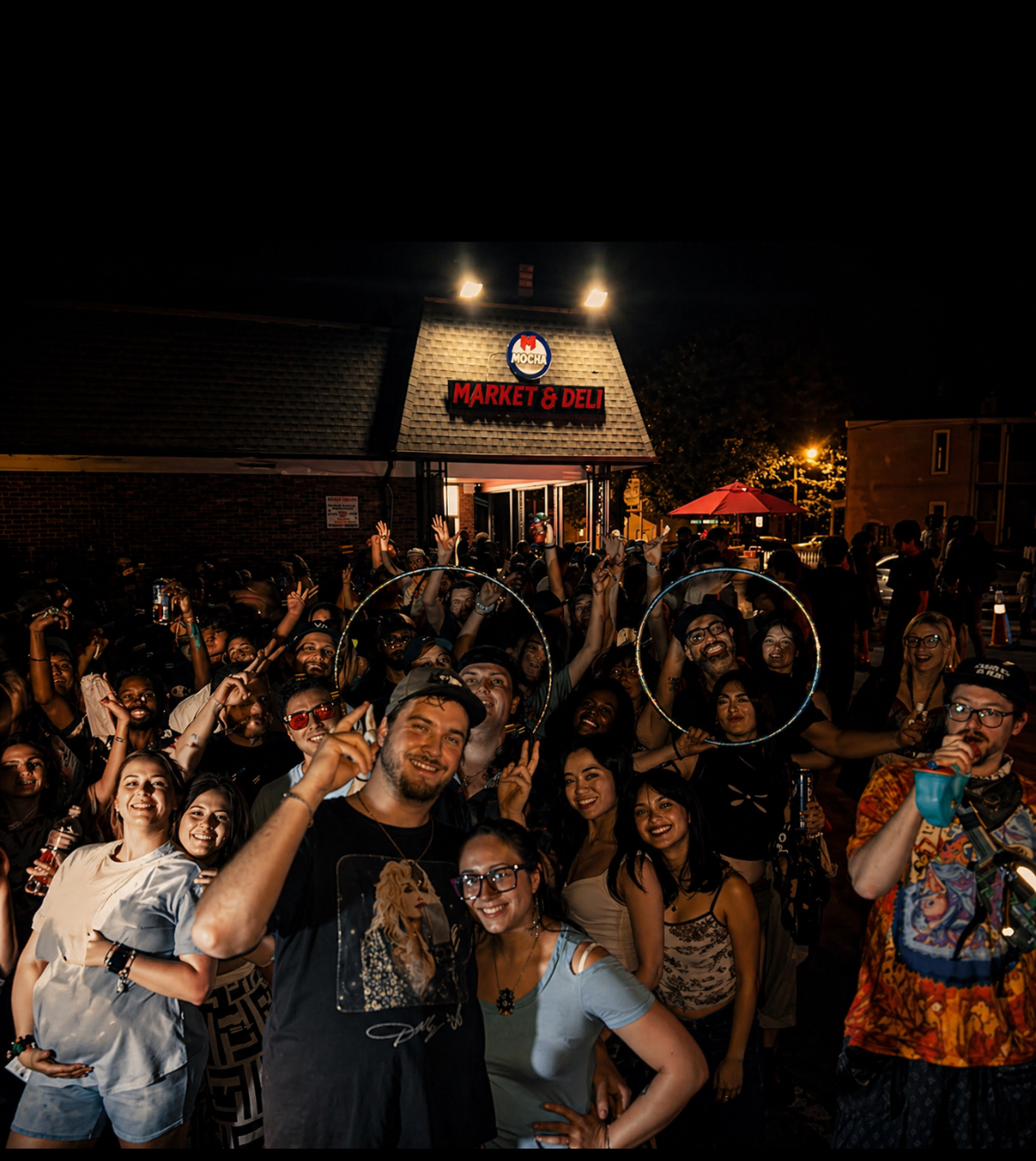
This field report documents Highclass Degens Collective’s “Rolling Back into Spring” pop-up at Mocha Mart on April 23, 2026. The event transformed a small retail space into a temporary music environment, blending electronic performance, local vendors, and cross-community engagement. Through observation of crowd dynamics, sound progression, and infrastructure, the piece examines how grassroots electronic music events in Richmond are actively shaping—and being shaped by—the spaces they occupy.
Mid Atlantic Monday (MAM), Episode 3
4/26/2026
[embed url="https://www.instagram.com/kaylaontheground/"]
RICHMOND — For a few hours, one block in Richmond stopped functioning as a pass-through and became a destination. Sound pushed past the walls of Mocha Mart and into the street, drawing people in before the space itself came into view. What reads as a neighborhood corner store by day shifted into something denser by night; a convergence point where music, movement, and community overlapped in real time.
That transformation was led by HighClass Degens Collective as part of their event “Rolling Back into Spring,” held Thursday, April 23, 2026, from 7–11 PM. The pop-up series continues to experiment with how and where electronic music can exist in the city. Their Mocha Mart activation builds on a format that’s been gaining traction locally: small-footprint spaces reworked into high-impact environments.
By the time I arrived, the crowd had already extended beyond the immediate lot. The surrounding VCU area carried its usual activity, but the energy here felt more concentrated. Bikes lined the block—many tied to the Broad Street Bullies ride ending nearby—folding another subculture into the mix. Students, cyclists, ravers, and creatives occupied the same stretch of pavement without friction, creating a layered but cohesive crowd.
Inside, the setup leaned closer to a micro-festival than a standard show. Vendors were positioned throughout the lot and interior, offering handmade clothing, jewelry, and flow props. Two food trucks anchored the perimeter, adding to the function of the space without pulling focus from it.
Mocha Mart itself operated as more than a backdrop. It became a central utility point; accessible drinks, quick transactions, and a steady flow of foot traffic moving in and out of the store. That convenience matters in smaller scenes. When basic needs are easy to meet, people stay longer, settle in, and engage more fully with what’s happening around them.
Musically, the night tracked Richmond’s broader identity: fluid, genre-adjacent, and bass-forward. Early house selections gave the room space to build before transitioning into heavier, low-end-driven sets. By the time the tempo locked into 140 BPM, the shift was physical. The crowd responded collectively, tightening toward the sound as the night progressed.
The lineup—Twinn, Rab!d Ron!e, Gnarly by Nature, Full Speed, Big Papa, and headliner be.In—highlighted the depth of local talent. The sequencing felt intentional, with each set building on the last rather than competing for contrast. It read less like a stack of individual performances and more like a continuous arc.
What stood out most, though, was the level of participation. Flow artists moved through the crowd instead of being staged off to the side. Props were shared. Techniques were exchanged. The barrier between observer and contributor stayed low throughout the night, which kept the energy from plateauing.
That said, the night wasn’t without friction, and those details matter in understanding how these events function in practice.
Sound consistency was the most noticeable issue. Volume levels remained relatively controlled (likely a constraint of the Oregon Hill residential setting) but intermittent dropouts disrupted momentum more than once. In a format that relies heavily on engagement, even short interruptions can reset the room.
The physical setup also introduced limitations. The gravel lot, while workable for movement, offered little in terms of rest or reset space. There were no clear seating areas, which becomes a factor over longer runtimes. Similarly, Mocha Mart’s interior traffic created bottlenecks; with only one person working behind the counter, wait times stretched during peak hours.
None of these issues are out of scope for a pop-up of this scale, but they point to where growth is happening. As these events continue to draw larger crowds, infrastructure will need to scale with them.
The night closed with a brief address from Hunter Perry (Big Papa), co-founder of HighClass Degens, reinforcing a simple message: these events are built by and for the community supporting them. It wasn’t overextended or performative, just a direct acknowledgment of the ecosystem in front of him.
That is what the night ultimately made clear.
As electronic music continues to expand commercially, spaces like this serve a different function. Large-scale festivals and touring acts drive visibility, but smaller, community-centered events sustain the culture locally.
What HighClass Degens Collective built at Mocha Mart for “Rolling Back into Spring” wasn’t just a weeknight renegade, it was an environment. One where artists, vendors, and attendees contributed equally, shaping the experience as the night unfolded.
That kind of space depends on participation.
In Richmond, that foundation isn’t theoretical. It’s visible, active, and still taking shape.
HighClass Degens Collective (@highclass.degens)
Rolling Back into Spring | Mocha Mart, Richmond, VA
PC: Shane Mitchell (AKA be.In is pictured in the front)