Senator Warner Challenges Richmond AI Leaders to Map the Jobs Transition
By Will Melton · June 13, 2026 · 7 min read read
Category: AI
Tags: Data Centers
Neighborhoods: The Fan
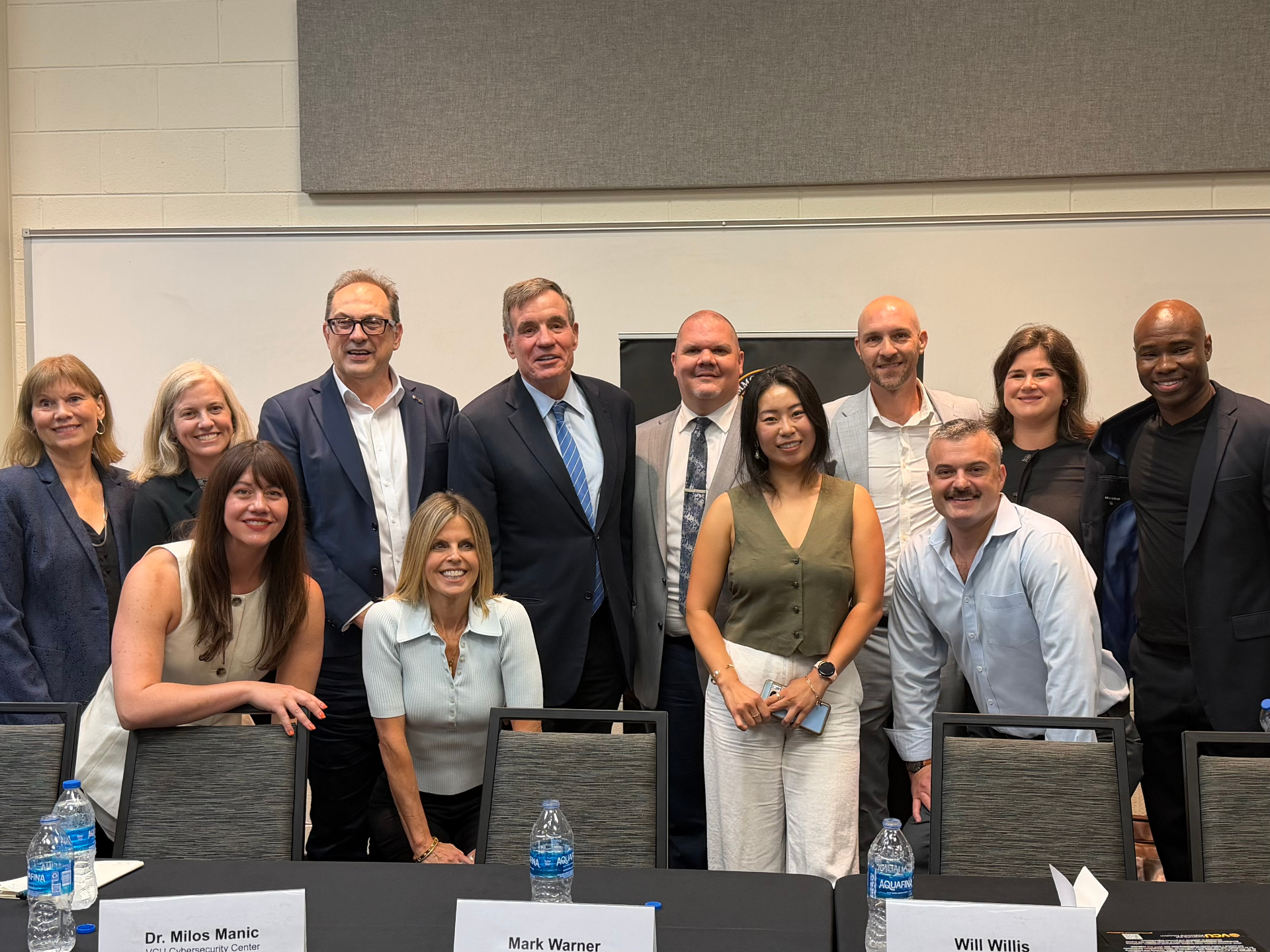
U.S. Sen. Mark Warner gave Richmond AI leaders 30 to 60 days to deliver a concrete career transition map for the region, warning the gap between AI job losses and new job creation could stretch two to five years.
U.S. Sen. Mark Warner sat down with a dozen Central Virginia technology, education, and government leaders Friday morning for an AI policy roundtable hosted by AI Ready RVA in the Virginia Commonwealth University Student Government Association Senate Chambers, and he left the group with homework: deliver a concrete career transition map for the region within 30 to 60 days.
An audience of about 70 filled the room, and several of their questions—on teacher pay, public AI access, and who holds power over the technology's direction—shaped the back half of the conversation.
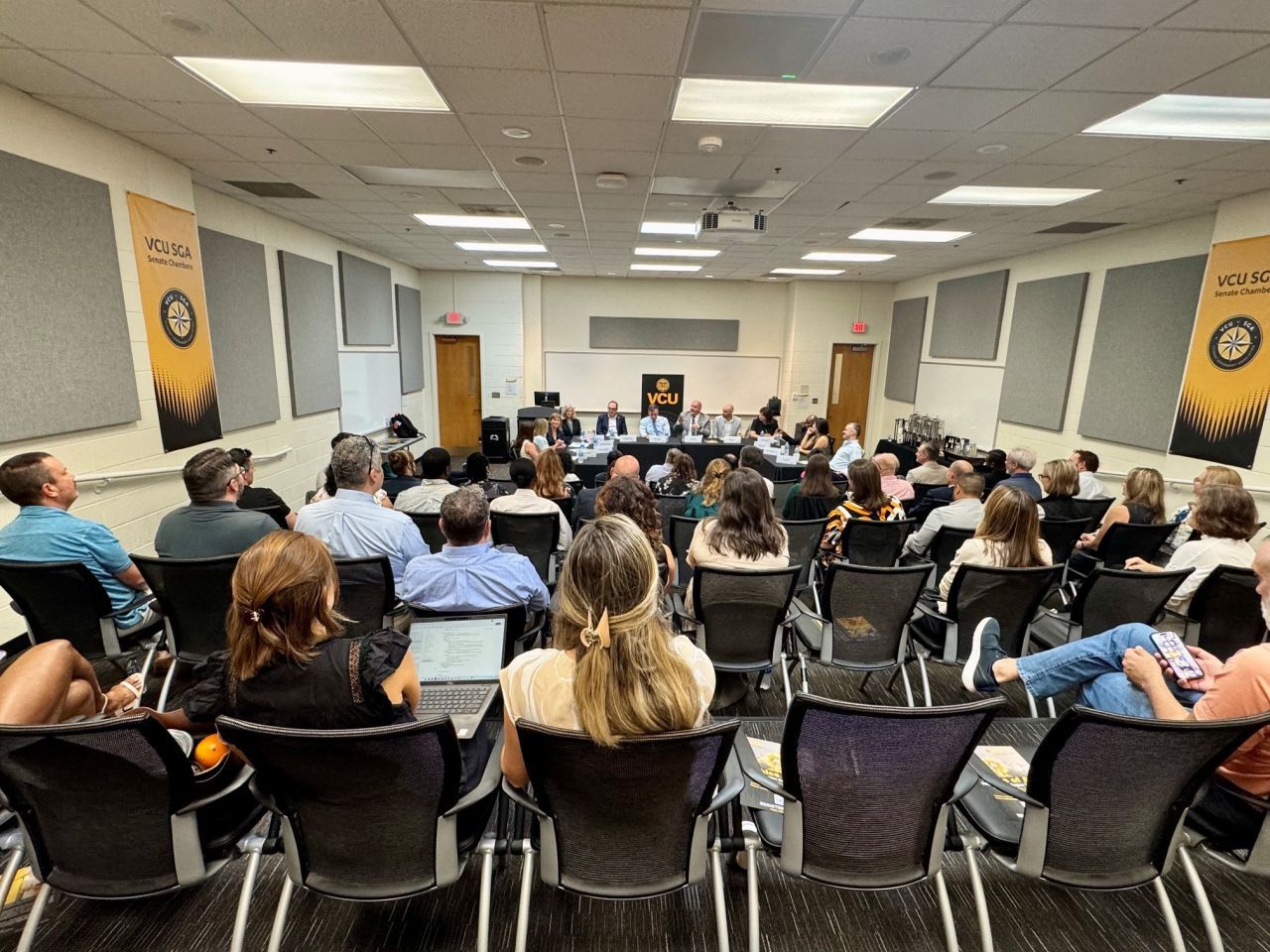
A view from the back of the room as Sen. Mark Warner addresses the AI Ready RVA policy roundtable at VCU on June 12. Photo courtesy of AI Ready RVA.
The assignment came at the end of a discussion that ranged from entry-level hiring freezes to data governance failures inside state agencies, and it reflected Warner's central argument—that the window to prepare workers for an AI economy is short, and no one has a plan yet.
A gap measured in years
Warner opened with a warning. He expects a gap of two to five years between AI-driven job losses and meaningful new job creation, and he argued the sharpest early signal is young people coming out of college and simply not getting hired.
"Roughly 9% recent college graduate unemployment," he said. "I will bet you it'll go to 30% in the next two years." Federal Reserve Bank of New York data put unemployment for recent college graduates at about 5.7% in the first quarter of 2026, though measures of the youngest degree holders ran near 10% in late 2025.
The senator backed the forecast with examples from his own conversations. "I know a top 10 law firm that's not hiring a single first-year associate this year," he said, noting the firm kept hiring even through the pandemic. He described a major telecommunications company that believes it can replace a customer service operation of 45,000 to 60,000 people with about 200, and a top-tier venture capitalist preparing to write down software investments because of what AI coding tools have already done to the industry.
Warner also put a timeline on the technology itself. "I do believe we'll get to the equivalent of AGI by the end of the year, beginning of next," he said. "And then, you know, watch out."
His conclusion: "We gotta get this right with an urgency of now."
The view from the hiring market
The roundtable brought together AI Ready RVA executive director Will Willis and participants spanning recruiting, state government, higher education, enterprise technology, and startups.
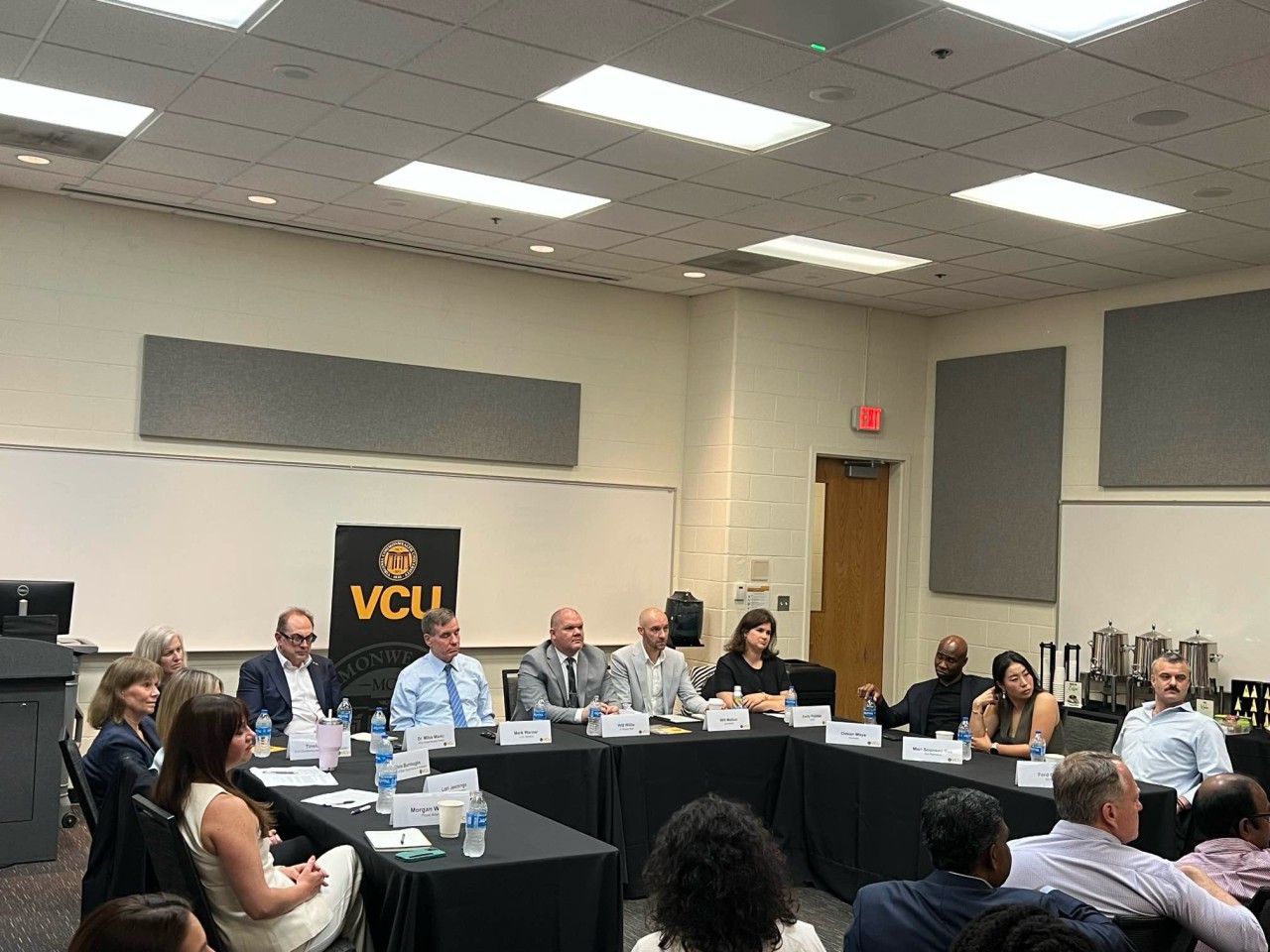
Roundtable participants discuss workforce impacts of AI alongside Sen. Mark Warner. Photo by Jason McGinthy.
Lori Jennings, founder of executive search firm Jennings ProSearch, said she places candidates in AI, data, and cybersecurity roles and is watching qualified professionals do everything right—upskilling, mastering the latest tools—and still struggle. "There simply just aren't enough jobs for everybody anymore," she said. She called for transition maps that show workers in declining roles exactly which adjacent, in-demand roles they can reach, what skills they are missing, and which employers are hiring.
Chris Burroughs, director of data governance at the Virginia Office of Data Governance and Analytics, argued that workforce planning will fail without fixing the data underneath it. Citing McKinsey research that most enterprise AI projects fail because of foundational data problems rather than technology, she described state datasets containing people recorded as born in the future, dozens of variant spellings of Dominion Power, and "13 different misspellings of Virginia Beach."
Milos Manic, the VCU computer science professor who directs the university's Cybersecurity Center and leads its Convergence AI initiative, made the case that critical thinking is the durable skill—tools and algorithms will change faster than anyone can predict. He also named the region's structural problem: "We have some of the top schools, industries, and agencies within a hundred-mile radius. You know what we don't have? We are not united." VCU is preparing a proposal for a National Science Foundation AI hub, he said.
Tinsley Jones, who leads continuing and professional education at VCU, said the university already has the vehicles to power a regional reskilling effort—digital credentials that can name skills, define earning criteria, and assess them—but needs industry partners to define which roles to map first.
Ford Prior, senior staff engineer and tech evangelist at GEICO, described the insurer's effort to restructure large technology teams into small, AI-equipped product groups, a transformation he said mirrors what the Richmond Hackathon is testing in miniature. Mari Soonsoo Bae, founder and CEO of Ara Platforms, told the group she struggles to find risk-tolerant young talent in Virginia and pressed for investment in U.S.-based open-source models as an answer to both accessibility and reliance on Chinese alternatives.
Warner echoed that last concern, citing a Booz Allen study of Chinese models. "If you ask the Chinese model in French, Arabic, or English a question versus Mandarin, you get a totally different answer," he said.
Other participants included Odean Maye, technologist and investor at Acuvero; Morgan Witham, founder and principal of Ficus Advisors, who raised the dual mandate of business adoption and regulatory protections for families; and myself, Will Melton, having described retraining workers inside my agency to build internal software and become product owners.
Ideas from the audience widened the lens. An educator from CodeRVA Regional High School raised the national computer science teacher shortage, driven by pay that cannot compete with industry—a question of who is left to teach critical thinking to the next generation. Another attendee floated installing AI access points in public libraries so the technology reaches residents who cannot afford subscriptions, a suggestion that connected directly to AI Ready RVA's search for a physical innovation community center in Richmond. "We've got our eyes on a space," Willis said—the organization now needs the funding to secure it. A third audience member pressed Warner on AI governance, arguing the country needs a binding framework built around human dignity in place of today's patchwork of voluntary commitments.
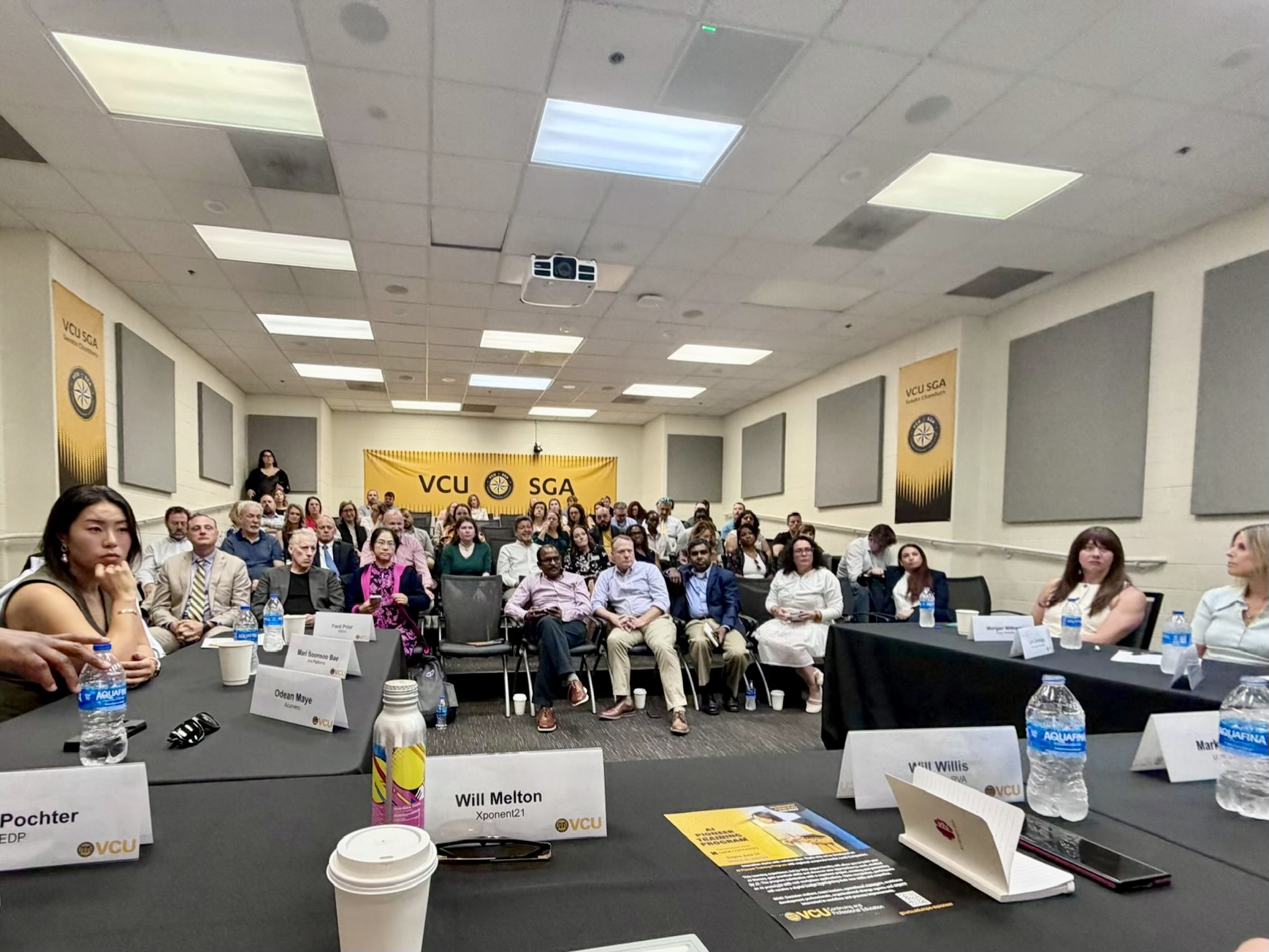
Audience members at the AI Ready RVA roundtable ask questions about teacher pay, public AI access, and governance. Photo by Will Melton.
The 60-day assignment
Warner's challenge crystallized a theme that ran through the conversation: roles defined by tasks are vulnerable, and roles defined by transferable skills can survive redesign. Participants discussed mapping which Richmond-area jobs face displacement, which adjacent roles are growing, and what specific curriculum bridges the gap—starting small and regional, without waiting for a national framework.
The senator made an offer alongside the deadline. "I think it would be great if you guys put a working group together to say, all right, we want to see if we can make RVA a national leader," he said. If the region produces a credible, specific plan, he can bring major technology companies to the table—but "you only get one bite at the apple," so the plan has to be ready first. He described Richmond as well positioned for the experiment: a midsize region, big enough to matter, without a dominant player already controlling the space.
On funding, Warner was direct about where money should come from. He called on the AI industry to support transition programs for the next three to five years, and urged Virginia lawmakers to treat any new data center revenue as a sustained funding stream rather than a one-time budget patch. "Create a revenue stream for three to five years, so that we in Virginia can match what the feds will do," he said.
Emily Pochter, director of cybersecurity and software at the Virginia Economic Development Partnership, pointed to infrastructure already in place: InternshipsVA, the statewide program Gov. Abigail Spanberger launched in February, offers wage-matching grants for small businesses with 150 or fewer employees, internship coordinators deployed across the Commonwealth, and free posting through a Handshake partnership. The goal, she said, is for every Virginia student to have the opportunity to intern.
Warner said he intends to return, and the group agreed to reconvene once the transition mapping work is underway.
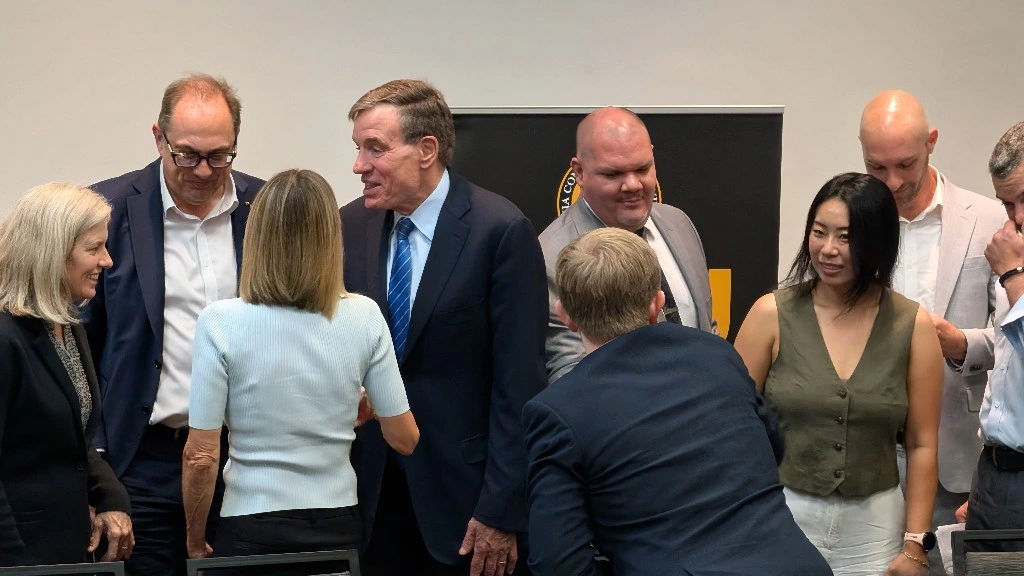
Sen. Mark Warner shakes hands with a participant following the roundtable discussion. Photo by Thomas McDonald.
Disclosure: Channel RVA founder Will Melton participated in the roundtable. Channel RVA's parent company, Xponent21, is an AI Ready RVA partner.